
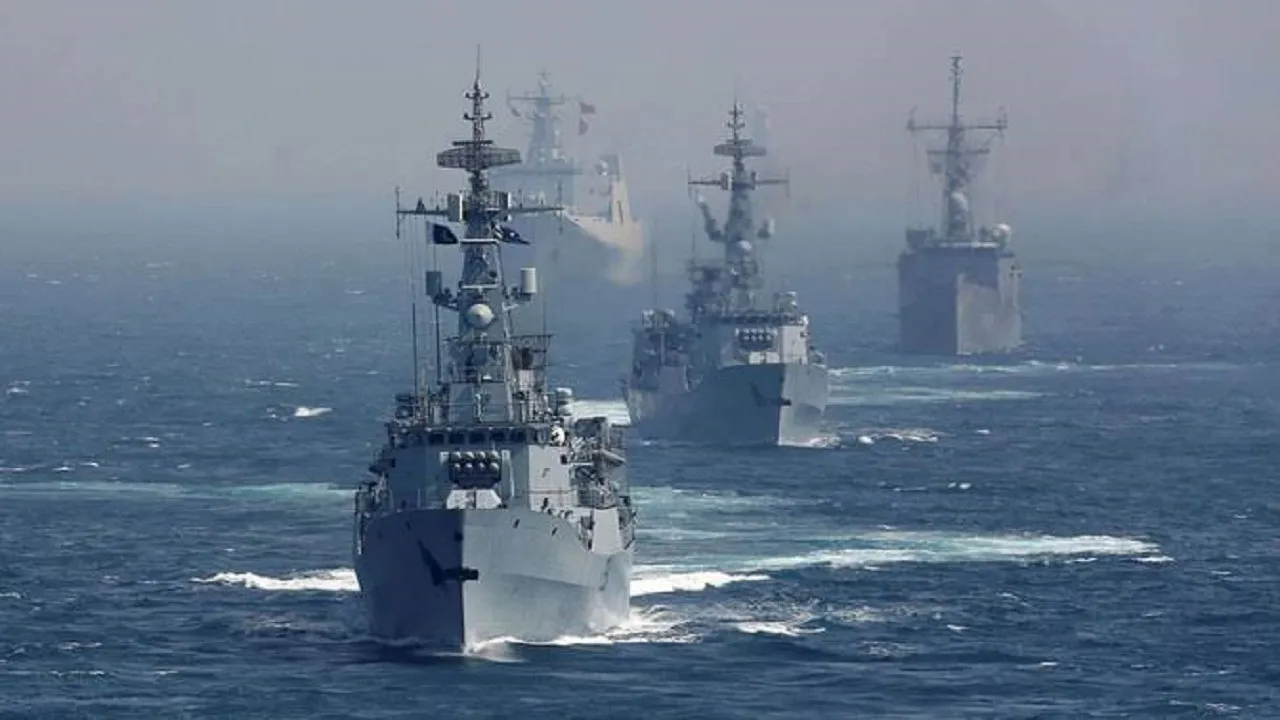
The Combined Maritime Forces, the 40-plus-nation partnership Pakistan has belonged to for two decades, was built around a threat environment that no longer matches what is actually killing sailors in the corridor Pakistan now depends on it to help secure. CMF’s founding mission, dating to the early 2000s, centred on counter-piracy operations against Somali pirate skiffs armed with rifles and rocket-propelled grenades. The threat that killed six people, including three Pakistani crew members, aboard the cargo vessel Tihamah on August 11, 2026, was a guided missile strike — in fact a double-tap attack using multiple missiles — a category of threat CMF’s original doctrine and force structure were never built to counter.
Piracy off Somalia peaked between roughly 2008 and 2012, prompting the international naval response that shaped CMF’s operational identity for the following decade: boarding teams, small-arms deterrence, escorted transit corridors and information-sharing centres designed to track pirate skiff movements. Those tools worked, and piracy incidents in the region dropped sharply as a result. But a missile fired from Yemeni territory at a transiting cargo ship is not intercepted by a boarding team, and a naval escort configured to deter a pirate skiff offers little protection against an anti-ship missile with a range measured in tens of kilometres.